Your company's needs have outpaced your team's development. No one has shown you how to close that gap.
Get the mindset and tools to lead at the level your vision demands.
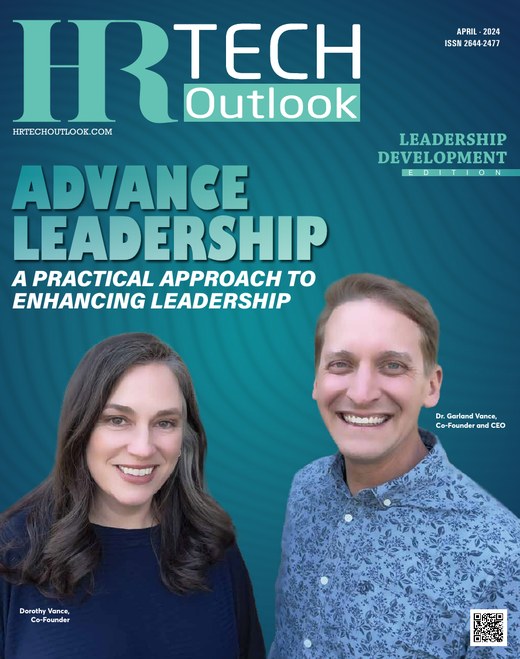
Named a Top Leadership Development Company by HR Tech Outlook.

You've invested in efficiency. A business operating system. Automation. Better equipment. Faster processes. Those investments are working. You'd never let any of them sit untouched.
Now picture your company three years from today. A faster operation in the hands of the same leaders hasn't removed the pressure. In fact, it's put more pressure on them. When they couldn't carry it, it landed back on you. Systems don't run a company. People do.
You've spent years upgrading the operation while leadership capability stagnated. When those two stop growing at the same rate, the operation outruns the people responsible for running it. We call that The Leadership Gap.
The wider the gap grows, the more it costs you:
As the CEO, you feel it every day. The people on your Executive Team excel in their lanes but you're the only one who sees the whole road. So you referee. You translate between departments. You explain, again, how one team's decision affects everyone else.
The vision stalls because you're the person who holds it, but you're too busy holding your leadership team together.
They weren't developed to lead the work.
Four out of five leaders received a promotion without any training for their new role. They were promoted because they performed. Then they were handed a title that came with people and budgets and told to figure out the rest.
Their responsibilities have outgrown their current abilities. That is a leashed leader. When an Executive Team is leashed, the whole company gets held back.
Your team should be ready for the company you're building. Not just the one you have.
are "accidental leaders" — promoted for technical ability, never trained for the role.
of the variance in employee engagement ties directly to the manager.
of companies doubt their current leaders can carry the organization into the future.
Developing a leader isn't an event or a moment of inspiration. It's a pathway, reinforced by conversations, mindsets, and practical tools.
Almost everything offered to your Executive Team so far has been the opposite: an event.
Every one of those is an event. Events inspire leaders, but their power wears off after a few days. A business doesn't grow in events. It grows every day, in hundreds of decisions your Executive Team makes and actions they take.
You already know what actually works, because you've done it everywhere else. Your operation got better because you gave it a sequence, a cadence, and accountability. Your Executive Team has never been given the same thing — so they stay leashed.
Three years from now, your systems are humming, but your Executive Team is exactly where it is today. And you're still the one holding everything together. Your best managers get tired of waiting and leave. The strategy gets decided in the conference room and never reaches the floor. The culture you dream of stays trapped in your head.
None of it shows up as a leadership problem on the P&L. It shows up as turnover, missed numbers, and a CEO who can't step away. And when you finally need this team to carry something big, they can't.
Dr. Garland Vance & Dorothy Wood Vance
We understand the frustration of feeling like you've got to carry it all and facing constant leadership challenges. We've spent over 25 years across the table from leaders like you, who could see exactly where the company needed to go and needed an Executive Team who could take it there. We discovered what actually develops leaders rather than what merely inspires them.
Developing leadership teams in a wide variety of industries—manufacturing, distribution, service, hospitality, and beyond—across the U.S. and Canada.
Named one of the top leadership development companies by HR Tech Outlook.
Our research finds seven issues cause 95% of the leadership challenges in any organization. Address all seven and your team can carry the strategy.
Featured on the cover of HR Tech Outlook's Top Leadership Development Companies.
We've witnessed success stories for over 25 years. Here are two.
Sales, operations, finance, and HR each ran like its own company, and none of them accounted for how their work landed on the others. The CEO wanted to sell within two years and knew his Executive Team was the one thing standing between the company and a clean sale.
They built trust first, then wrote their own operating principles for how they would work together, including one principle on how they would discuss, debate, and decide. Writing those principles forced them to collaborate, disagree, and land on an answer, which was something they had never been able to do.
They argue hard and land the decision in the room, and the decision holds. Each leader checks how a call lands on the other departments before making it. The CEO is no longer the tiebreaker.
The company sold for 2.5 times its expected valuation.
On day one, a team member told us he had no interest in changing what he was already doing. By the end of the first day, he said, "I've known a lot of 'leadership experts' in my life. You all are the first ones I will listen to."
The team competed against each other instead of collaborating. They blamed each other when plans didn't work. Nobody was accountable for the whole.
The leaders came together multiple times over a year to grow in clarity and trust. They started helping each other and shaping a culture together rather than defending their own corners.
Leaders across the business share one language for leadership, so a problem gets described the same way in two different places. They back each other across the business instead of guarding turf. A leader running one part of the company will hand work to a leader running another without being told to.
As the leaders started working together, the company grew from $1.8 billion to $3.76 billion.
Year one, a respected team member asked, "Do you mean we're supposed to care about these people?" Today, working together is simply how they lead.
I've used Unleashed Leadership throughout two manufacturing organizations — from executives to plant managers to frontline supervisors. The leadership strategies are grounded, usable, and built for the real demands of day-to-day operations. The tools show up in conversations, decisions, and growth across the business.
I've had the Unleashed Leadership framework taped to my desk for years — and for good reason. It has shaped how our leadership team approaches the daily challenges of leading people. It's practical, powerful, and deeply relevant.
This is truly next level leadership at its finest. I have advanced my skills to a level beyond what I thought was possible. Garland and Dorothy pave a clear path for how leaders lead and lead other leaders. My team now sees the results and impact of the leadership skills I've practiced because of their direction. They helped build a high-performance team.
What This Path Looks Like: Your team meets with us live one day each quarter. Each session introduces ridiculously practical Unleashed Leadership tools that unlock the skills of every person on your team and accelerate their ability to work together. Your team develops new practices, engages in the conversations they've been avoiding, and starts carrying the vision forward.
What This Path Looks Like: Customized entirely around your company, we diagnose which of the seven issues are leashing your Executive Team. We design meetings and gatherings around those issues. These include:
16 questions, 3 minutes. Get your Leadership Team Score to see where your team stands.
30 minutes. Explore the path to unleash your team.
Select the best path to unleash your team and move the company forward.
Both paths lead to the same place. Here is what it looks like.
| How your team is today: | How your team operates in 1 year: | |
|---|---|---|
| Every decision lands back on your desk. | The team decides and commits in the room. | |
| Conversations after the meeting sabotage your decisions. | The team discusses and debates during the meeting. | |
| Each leader protects their own department. | Each leader thinks about the whole company first. | |
| You re-explain the strategy at every level. | A manager two levels down can name the plan and their part in it. | |
| When something slips, the team looks for others to blame. | The team owns the outcome together and fixes it. | |
| Employees are dissatisfied with their boss. | Leaders invest in and keep your people. | |
| The business can't run without you. | You take a vacation while nothing stalls. |
This is for you if you can see where the company is going, but you're not sure your team can get it there.
A few signs the gap is already costing you:
If your vision is waiting on your team to catch up, you're in the right place.
You probably could, if you had the time. That's the problem. You're already carrying more than one person should, and developing your team is the work that gets squeezed out first. It takes a fraction of the time and no headaches for us to develop your team.
Yes. If you've experienced leadership training before and watched it fade, that's a fair question. Most training gives you content and then leaves you to figure it out. Not only do we give you ridiculously practical tools, but we help your team turn those into habits. Learn more about the difference in the Transformation Formula.
Less than the time you're currently spending trying to build a stronger team. It's built to fit around the work rather than pile on top of it. Expect one full day each quarter and a few focused hours a month from your team. Our goal is to limit the time it takes you so that you can maximize your time.
Less than the cost of a year with your vision sitting still. That's the price you're paying right now, and it compounds. Against that, the investment is modest: developing your whole leadership team costs less than replacing one leader on it, and losing leaders is what happens when they stay leashed. What you invest depends on which path fits your company. We figure that out in the Discovery Session, and if we're a fit, that's when we talk numbers.
Lighter than you'd think, but not nothing. You get briefed before each training session and might have some prework. You fully participate in the training sessions and the check-ins. But the day-to-day work is theirs, which is the whole point. The goal is a team that carries more, not a CEO with one more job. This was never about fixing you. It's about freeing you.
They rarely do at the start, but they'll think differently after the first session. Your Executive Team has been to the keynote and the retreat, and they're expecting another one. What changes their mind isn't the invitation. It's after the first session when they use the tools and become more effective. We'll help you introduce it in a way your team doesn't resist. In our experience, the loudest skeptic in the room often becomes the strongest advocate.
The same way you measure anything else you invest in. You pick the one number that proves it worked:
We baseline it before we start and look at it together every year. If you can't measure it, don't buy it. That goes for us too.
We'll give you resources. Many CEOs we work with have someone else to convince. That's normal, and it's our job rather than yours. Tell us who they are and we'll either join a conversation with them or send a short video that explains the work, the cost of waiting, and what changes in the business. You shouldn't have to convince them on our behalf.
When your leadership team grows the whole company does, too. The team leads instead of just working. The company pulls together instead of apart. And the weight comes off you.
In meetings. Your leaders walk into the room excited to collaborate, so meetings are productive, not dramatic. Difficult conversations happen without anyone getting defensive. When a decision gets made, they commit and stick to it.
Across the business. The silos come down because everyone is working from your vision. Leaders in different locations and departments work together to solve the same problems. Work moves forward without interpersonal friction.
For you. Problems stop escalating to you unnecessarily. You stop refereeing the silly squabbles. You take vacation without calls that pull you back in. You stop carrying the whole weight of the company and get to lead it forward.
"I'm not the only one carrying this anymore."
— what CEOs tell us a year in.
Take the Leadership Gap Assessment. 16 questions, 3 minutes. You'll get a Leadership Team Score and a conversation if you want one.
Start AssessmentNot ready to talk yet? Get the 7 Issues That Leash Your Leadership Team — a short guide and video on the seven issues behind 95% of leadership challenges. Share it with your whole team.
Unleashed Leadership, free in two formats.
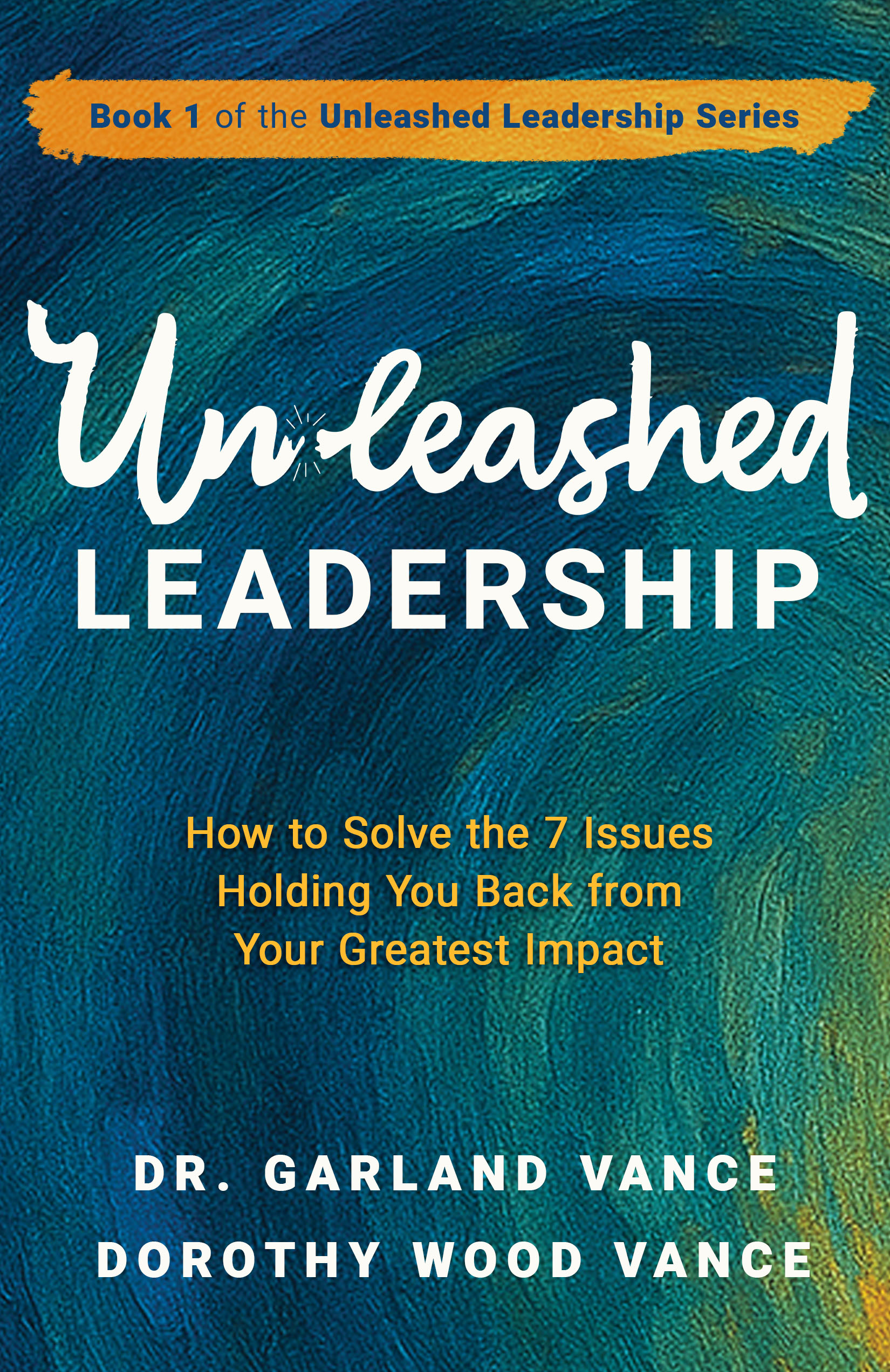
Every leader on your team eventually hits the point where their responsibilities outgrow the abilities. In that moment, they need to diagnose what's holding them back and discern how to get unleashed. This book gives you both: the seven issues behind 95% of leadership challenges, and the tools to solve each one. Pick the format that fits your week.
The whole book, read by Garland and Dorothy. Listen on the drive between locations. Just tell us where to send it.
Send me the audiobookThe seven issues and the tools for each, in under 5 minutes. Sent straight to your inbox.
Send me the summaryWhen a leader gets unleashed, they unleash everything around them.